


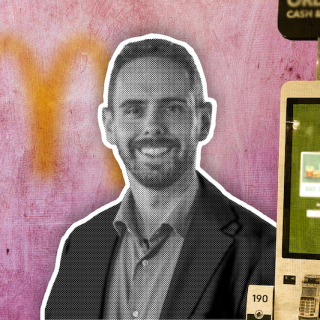




At ITB Berlin 2023, Michael Kessler, CEO of Shiji Group’s ReviewPro spoke with Patrick Apostolo, Corporate Operations Director for EMEA at Radisson Hotel Group, about how Radisson digitized their guest journey. Read on for the highlights from the conversation.
Summary: Patrick Apostolo has led Radisson Hotel Group's digital transformation since 2018, focusing on automation, a mobile-first approach, and tailoring guest experiences. With a foundation in data-driven decisions, Radisson began with a minimum viable product and continuously iterated on it, expanding its mobile-first approach across Continental Europe and Asia Pacific. The company has implemented mobile check-ins, chatbots, and robots to enhance guest experiences. To successfully carry out their digital transformation, Radisson focused on company objectives, guest input, and finding the right partners. Apostolo believes that the future of digitization in hospitality will involve more integrations and personalization, and while automation is essential, human interaction remains a key aspect of the industry.
Radisson’s Digitization Roots
Patrick Apostolo has been with Radisson Hotel Group since 2016, and previously made a career in events with Starwood Hotels. Since 2018, he has been designing, building, and implementing the digital transformation plan at Radisson, which has emerged as an innovator in that space by embracing automation and a mobile-first approach even before the great push fueled by the pandemic. Although he comes from an F&B background, Patrick jokingly explained how digital transformation has always influenced his career: “I’m a lazy Italian, so I hate to have non-value-added tasks or anything that isn’t bringing important value to the guests, so digital transformation is an enabler to work on the moments of truth for our guests and make them memorable”, also adding that the process is and will continue to be as much a part of the guest journey as it is of team members.
3 Digital Transformation Tips
- Plan your digitization with company goals in mind, innovate and test often, and don’t be afraid to make mistakes
- Operational excellence is key– listen to your guests to guide the way.
- Hospitality is ultimately a people business. Automation is here to add value to interactions.
While COVID-19 accelerated their digital transformation, Patrick’s team kicked off the process following a 2016 study on the subject published by Harvard Business Review that showed the Hospitality Industry was only ahead of construction and hunting & fishing in terms of adoption. The goal was then to adapt to the different generational mix on the consumer side.
Knowing that they were looking at a global expansion for the project, Patrick and his team decided on a solid foundation for the whole process, which could, at the same time, be realistically flexible and personalized to the company and its many properties, respecting local and global particularities. It was therefore important to partner with a vendor that matched these specificities to develop a product for the hotel group, and the chosen partner was ReviewPro for its ability to provide insight into what their guests were saying and to allow for analysis of quality KPIs.

Establishing The Guest Journey
For Patrick, the first and most basic rule of mapping the guest journey is to be data-driven. He highlighted the importance of data visibility to think through every moment of the journey, as well as accept that mistakes can happen. “We started with an MVP, or minimum viable product, and evolved it by making mistakes and trying things out, by redoing it, and being agile and flexible in actually responding to guests’ needs.” As a result, their mobile-first approach is already live in most of Continental Europe, as well as Asia Pacific, albeit with slight variations to the journey that are specific to those regions. He reiterated that the more seamless a “moment of truth” interaction is, the better the user experience will be for the guest, in turn defining how they will remember Radisson.

Mobile check-in has had great acceptance and satisfaction levels from guests, and recent surveys showed six out of 10 guests enjoy having a digital experience. As further examples of automation deployed, Patrick mentioned chatbots and even robots delivering items to guest rooms in some hotels – such as in Zurich, which saw guests playing and interacting with the robots for a chat instead of just receiving items from them. He then went on to remind us that guest-facing activities aren’t enough, and connecting with the planning tools that allow the operations team to deliver the hotel’s promise is necessary. “Many times we think only of the guests’ journey, but forget how this can be integrated across the funnel.” Adding to that, Patrick recounted how another moment of truth element – digital payments – was initially dropped as it was thought guests wouldn’t be comfortable using it, but had to be reworked back into the journey once data showed this assumption was wrong. “Another example of hearing the voice of the customers, being agile and data-driven to adapt as fast as possible,” he commented.
Defining Objectives
When making decisions regarding what technology solutions to employ, Patrick established that at the foundation of the transformation process, it is crucial to be clear on the company’s objectives, and find the perfect guest journey by reviewing it as many times as necessary following guest input. He also advised establishing the fixed and moving parts of the system and to find the right partners based on your needs and their capabilities. “Call up a few vendors and challenge them, see what they’re all about. Leverage this digital technology and don’t be afraid to fail. Failing is good, as long as you use it to come up with a solution afterward.” As he learned along the way, he also advised being brave in testing, as well as in failing, and always listening to the guest and focusing on what will satisfy them.
RELATED:
Digitize the Guest Journey in 2023 and Beyond
When asked his opinion on what lies ahead for digitization in hospitality, Patrick predicts that it will continue and go more into integrations, influenced by the generational shift in hotel guests and offering a more personalized approach that can adapt not only to the guest but also to how it is used internally to deliver service. Regarding possible internal resistance to adopting new ways of doing things, he recounted an anecdote: “Many times I will ask the team, ‘Do you use WhatsApp to communicate? Then why not use an internal communication tool? Do you buy stuff on Amazon? Then why not use a purchasing system or app at work?’ And the big joke is, ‘Do you use Tinder to date? Then why not use a talent acquisition app?’”
Lastly, Patrick once again referenced the importance of being consistent with data visibility to be flexible, make decisions, and adapt. And answering a question from the audience, Patrick ended by saying that as we are a people business and service-oriented, we will not do away with human interaction, but we need to bear in mind that our team members should have more important things to worry about than checklists, looking at the PMS, or filling out an end of day report, and that’s where automation can help.


