








11 Nov 2014 by ReviewPro in Best Practices
Your company has just acquired a new hotel property and has seen a repositioning opportunity to improve its image, profitability and value. How can online review analytics help you through this process?

As Jim Collins famously said in Good to Great, the first step in creating an environment for superior performance is similar to driving a bus:
“Get the right people on the bus, the wrong people off the bus, and the right people in the right seats.”

When a luxury boutique hotel, The Modern Honolulu, was recently acquired, the owners understood that repositioning their hotel started with getting the right people involved. One of their first moves was to recruit a managing director from a prestigious local competitor. “We wanted to work with him because we needed to define our service level and build systems to deliver the service experience on a consistent basis,” one of their executives told us. “Everything else flows from the top down.”
Additionally, these owners created a new position – “Guest Ambassador” – who is dedicated to anticipating needs, reading customer feedback, following up, and making extra efforts to ensure guests are happy.
The role reports directly to the general manager and has 100% authority to fix any problem. This concept has been so effective that the owners of the hotel say it may be the single most important action the property has made to instill a service culture among the hotel’s staff.
“The new position has signaled to everyone our strong belief in taking responsibility to make things right. As a result, other managers feel empowered to emulate the same approach in their service areas. It’s like we hired one and got two dozen.”
Start with the people.
Next, assess the situation
ReviewPro’s review analytics can help you quickly understand where the hotel’s strengths lie – and what differentiates it – from the perspective of its guests and the guests of competitor hotels.
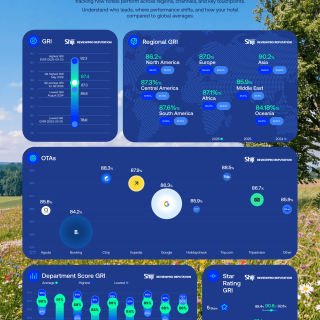
With the Global Review Index™, you can assess the current overall guest satisfaction of a hotel, track its progress over time – and compare to competitors. The same comparisons can be done by department, review source, reviewer origin, and more.
With semantic analysis, you have the ability to spot themes in the written text of online guest reviews. Here’s a sample report for a New York hotel. As you can see, quality, staff, location and views from the room are all aspects of this hotel’s experience that guests talk about positively:


Once you have performed your assessment, it’s time to reposition the asset in line with the opportunities you have.
Finally, reposition on strengths
The strengths and competitive advantages that you identify through your situation assessment should become central to all advertising and marketing communications you plan. They should influence every touchpoint you have with guests and prospective guests.
What Martin Soler & I wrote for Tnooz a while back is truer than ever:
“…The downfall of marketing lies in faulty pre-determined ideas of how to best push your product. Successful marketing starts when marketers know how the customers perceive the product and then change, improve or replace that perception with the one customers want most.” This is where an analysis of guest feedback online will set the cornerstone for your marketing strategy. A careful study of a hotel’s online reviews will reveal exactly what guests like and don’t like. With this information, you can now know what to avoid and what promote.”
The hotel in the example above could increase the effectiveness of their communications by focusing on promoting these elements guests appreciate most. Taking this approach will likely lead to an even better online reputation, since it will help attract guests that appreciate what the hotel does best.


