







Data is everywhere. In our computers, in our phones, in the cloud, and virtually every kind of system or software that records information. Let’s just say there is a lot of data out there. Once you have all of your data, what next? We’ve talked about data platforms and their value to the hospitality industry. However, a data platform alone is not enough. Hotels also need Business Intelligence tools to analyse, visualise, and act on their data.
What is Business Intelligence?
According to Investopedia, business intelligence (BI) is the infrastructure that collects, stores, and analyses business data. It presents performance metrics and trends in a way that supports management decisions. In simple terms, Business Intelligence helps organisations make data-driven decisions through analysis and visualisation. While that sounds easy enough, interpreting data and turning it into action is rarely straightforward. Not exactly.
Collecting data is only the first step. Hotels also need the right tools and processes to turn that data into actionable insights and better business decisions.
What is the difference between a dashboard and a hotel Business Intelligence tool?
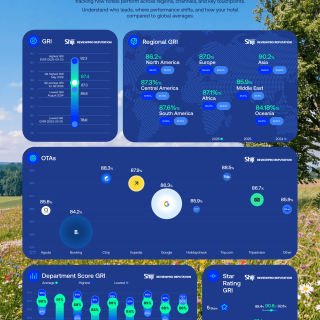
While dashboards are extremely relevant and useful to hoteliers, they lack the extra step that business intelligence tools offer. Analytics dashboards are essential for understanding business performance. They help decision-makers track key metrics, identify trends, and monitor performance over time.

Business Intelligence tools take this a step further. They help hoteliers turn data into actionable insights that support better decisions, reduce costs, increase profitability, and improve operational performance.
While experience and expertise remain essential, BI tools provide additional context that may not be obvious from dashboard data alone. They help uncover patterns, trends, and opportunities that might otherwise go unnoticed.
BI tools automate the analysis of data from PMS, POS, revenue management, reservation, and spa and golf management systems. This allows hotel teams to spend less time gathering data and more time acting on it.
Types of Business Intelligence tools and the key factors to look for in a Business Intelligence tool for hotels
Hotels can choose from a wide range of Business Intelligence platforms. Some are built for independent properties, while others support enterprise hotel groups. Certain solutions focus on custom reporting and analytics. Others specialise in areas such as revenue management, operations, or F&B performance.
Different types of hotel BI tools
Like any technology investment, it’s important to understand what a product offers and how it fits your hotel’s needs. Business Intelligence platforms vary significantly in their features and functionality. Hotels should evaluate every BI solution across five key areas: infrastructure, data management, analysis and content creation, sharing of findings, and overall platform capabilities.
Core data management capabilities
Data management is a key consideration when selecting a Business Intelligence platform. A BI tool should be able to manage metadata, load and store data, support customisation, and efficiently handle the large volumes of information generated by hotels.
Analytics and reporting capabilities
A BI platform must be able to analyse data and present it through interactive dashboards. These dashboards should make complex information easy to understand and act upon. Business Intelligence tools should also help users share insights across multiple platforms, including mobile devices.
Integration and connectivity
As the hotel industry becomes more diverse and unique to individual companies, APIs and open platforms are becoming integral to hotel technology. A BI tool needs to not only have these capabilities but also allow for sharing and extraction of the data analysis. Last, but not least, hotel Business Intelligence tools must also be easy to use and visually appealing, as they allow all of the other factors to come together and decision-makers to use the technology seamlessly.
What are the pros and cons of Tableau, PowerBI, Juyo Analytics, etc.?
As Business Intelligence has become a core part of hotel operations, the number of available platforms has grown significantly. Today, hotels can choose from both general-purpose BI tools and hospitality-specific analytics solutions.
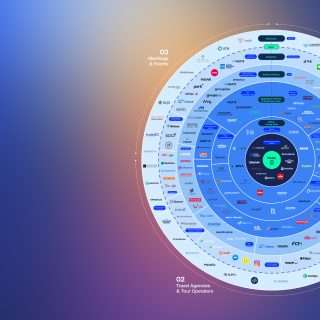
Some of the most widely used BI platforms across industries include Microsoft Power BI, Tableau, Qlik, SAP BusinessObjects, and IBM Cognos. These tools offer powerful reporting, dashboarding, and data visualisation capabilities that help organisations turn large volumes of data into actionable insights.
General-purpose BI platforms
According to Capterra, some of the most widely used Business Intelligence platforms include Microsoft Power BI, Tableau, Qlik, SAP BusinessObjects, and IBM Cognos.
Within hospitality, Business Intelligence has expanded far beyond revenue management. Today, hotels use BI across operations, finance, sales, marketing, guest experience, and executive reporting.
Hotel Tech Report lists a variety of hospitality-focused analytics platforms. Examples include HotelIQ, Hotelistat, Lighthouse, OTA Insight, and other specialised solutions designed to help hoteliers analyse performance, improve forecasting, and optimise business outcomes.
Choosing the Right Business Intelligence Tool
When selecting a Business Intelligence platform, hotels should consider factors such as business size, budget, available integrations, reporting requirements, and who will use the system on a daily basis.
For example, Power BI often appeals to organisations looking for a cost-effective solution that integrates closely with Microsoft tools. Tableau is popular among organisations that require advanced visualisation capabilities and more complex analytical workflows.
Hospitality-specific platforms differ based on geographic coverage, supported integrations, target market, and functionality. Some operate as standalone analytics solutions, while others form part of a broader hospitality technology ecosystem. Many hospitality analytics platforms offer dashboards for both single and multi-property operations, along with forecasting, budgeting, benchmarking, occupancy analysis, RevPAR reporting, and business performance tracking.
Benefits of Business Intelligence tools for hospitality and why hotels need them
Faster reporting and better decision making

It would be impossible to count the number of decisions that are made on a daily basis in a hotel from the executive level to front office that will impact the hotel in one way or another. Needless to say, there’s a lot going on within a hotel and time is of the essence. Before BI tools, in order to have your data presented in easy-to-read graphs, you would have to pull your data into Excel to build any type of diagram, graph, chart, etc. Only after you sorted through all of the data and skillfully reorganized it to allow these presentation tools to be created, could you find your data in a semi legible manner. Now with BI tools, hotels can take their data from a PMS or other systems like CRM or membership systems, digest it with analytics tools, and easily have data visualization within a matter of seconds. However, the last step that needs to take place how to make decisions based on analyzed and visualized data.
Connecting multiple data sources
Hotels can then store harmonized data from different data sources and connect it with any BI tools, which allows hospitality organizations to be build graphs with one click depending on source data points. With BI tools, this can also be done quickly thanks to the graphics and easy-to-use features of a BI platform. Thus, data platforms using hospitality BI tools can help hospitality businesses create customized visuals, combining different data sources without having to ask their IT specialists or data scientists to build thousands of customized queries, which have to be accumulated in Excel or SQL database.
Operational efficiency and cost control
For hotels in particular, BI tools have many benefits specific to the industry. For instance, hotels deal with huge amounts of inventory on a daily basis and BI tools are incredibly useful when tracking costs, monitoring supplies, and reducing spending in departments where inventory can be cut.
Guest experience and marketing insights
BI tools can also act as add-ons to a hotel’s CRM program as not only can you track a guest’s booking history and spendings, but you can also use BI to customize a guest’s stay further by building guest profiles, detailing their preferences, needs, and interests. Additionally, as in most industries, marketing is a huge factor in the success of a hotel’s business. Hotel BI tools allow marketing campaigns for hotels to be even more targeted to specific audiences as it helps track success rates of previous campaigns. Not only do BI tools help hotel managers make decisions, but they also cut costs, increase customer loyalty, and enhance marketing tactics.
Who should be using the tool daily?
Anyone who makes a decision in a hotel can benefit from a BI tool. Owners, revenue managers, Spa/Golf managers, F&B managers, general managers, sales managers, etc. As data lies in all aspects of a hotel, most divisions can benefit from using a BI tool to help with their decision making process. On the other hand, operational employees may not need to use BI tools, but instead, carry out the decisions made from a manager using the BI technology. So, in the end, BI tools do affect most parts of a hotel, directly and indirectly.
Data Platform and BI connector
It’s clear that Business Intelligence tools can deliver significant value to hospitality organisations. However, one challenge has traditionally limited adoption: not every hotel system can connect directly to a BI platform. Many legacy PMS, spa, golf, and operational systems were not designed with modern integrations in mind. Does that mean hotels using these systems cannot benefit from Business Intelligence? Not necessarily.
How BI Connectors Simplify Data Integration

BI connectors help bridge the gap between hotel systems and analytics platforms. Rather than relying on manual exports and data manipulation, connectors automate much of the process required to prepare and transfer data into a Business Intelligence environment.
This helps ensure KPIs are calculated consistently while reducing the workload for hotel teams.
Why Connectors Matter for Hotel Technology
According to Isabel Eisenach, SnapShot’s Key Account Support Manager, many BI platforms rely on connectors to simplify integrations. While cloud-based applications often support APIs, legacy or on-premise PMS solutions frequently require data extraction and transformation before information can be used for analytics. Connectors help automate this process and create a more consistent flow of data between systems.
Managing Multi-Property Data Challenges
Direct PMS-to-BI integrations can also become complex when hotel groups operate multiple properties with different systems, configurations, or naming conventions. Without a layer that standardises data, reporting can become difficult to manage and maintain across the organisation.
Manual data preparation often requires additional resources and increases the risk of inconsistencies between reports. As reporting requirements grow, the effort needed to maintain integrations and validate data can increase significantly. In many cases, using a dedicated connector is more efficient and cost-effective than building and maintaining custom integrations.
The Long-Term Value of Business Intelligence
Simply put, modern Business Intelligence platforms help hotels transform data from PMS, POS, CRM, and other operational systems into dashboards, reports, and actionable insights. By reducing manual work and improving access to reliable information, BI tools help hotel teams make faster and more informed decisions. As hospitality becomes increasingly data-driven, the conversation is no longer whether hotels need Business Intelligence, but how they can maximise the value of the data they already have.
This article was originally written by the SnapShot team. It has been moved here as part of the Shiji Group family of hospitality technology brands.


