








Introduction
In the tourism landscape, sustainability has emerged as a cornerstone for forward-thinking businesses eager to align with environmental values and modern travellers’ expectations. Ecotourism Australia, a leading national body committed to fostering sustainable tourism practices, has been at the forefront of this transformative journey. In this interview with EcoTourism Australia, we delve into the organisation’s strategic use of data analytics, certification programs, and customer feedback to promote and implement sustainable tourism practices. Offering valuable insights into how data-driven strategies can enhance the sustainability efforts of tourism operators and overall guest experiences.
Overview of the Interview:
The interview with Nadine Schramm, Head of Sustainability and Business Operations, Ecotourism Australia, offers an in-depth look at the organisation’s approach to monitoring and improving sustainability practices among tourism operators. By leveraging its Reputation Management System, Ecotourism Australia provides certified operators with crucial data analytics and feedback, enabling them to benchmark their services, understand customer perceptions, and identify areas for improvement. The organisation outlines its role in defining sustainability within the tourism sector, the importance of certification programs, and the strategic use of data to guide operators towards better sustainability practices and guest experiences. Furthermore, the discussion touches upon the challenges and opportunities within sustainable tourism, offering advice for new operators and highlighting the future role of technology in the sector.
5 Key Takeaways
Continuous Improvement through Data: Ecotourism Australia underscores the importance of continuous improvement for certified operators, utilising customer feedback and data analytics to inform and guide sustainability practices.
Certification as a Benchmark for Sustainability: The organisation highlights its globally recognised certification programs as crucial tools for operators to gain recognition for their sustainability efforts and to inspire others within the industry.
The Power of Customer Feedback: Customer reviews and feedback are vital in shaping the services offered by member organisations, emphasising the need for a proactive approach to collecting and acting upon this input.
Addressing the Knowledge Gap: Ecotourism Australia identifies a significant opportunity to educate travellers about sustainable travel options, advocating for increased visibility and communication of sustainability initiatives.
Technology as a Catalyst for Change: The future role of technology in sustainable tourism is pivotal, with the potential to empower businesses and travellers further to make informed, sustainable choices.

How did you realise that you needed to monitor reputation? Please give us a bit of the backstory of how you got to the decision that you needed to do this.
EcoTourism Australia is dedicated to providing opportunities for continuous improvement for our Certified operators. 62 ECO-certified operators have been certified for over twenty years, and more than half of all our operators have been certified for over ten years. As leaders in sustainable practices, they, and all our Certified operators, are committed to continuous improvement. Sustainability standards continuously evolve to be more rigorous and respond to global trends. By using our Reputation Management system, we saw an opportunity to help our Certified operators improve their operations based on customer feedback analysis,
Customer satisfaction is key for quality tourism, and a positive or negative review can heavily impact potential customers’ purchasing decisions. We utilise our Reputation Management product to help benchmark our operators’ online reviews, particularly their sustainability reviews. By delivering an individual operator’s report and an organisation-wide Annual Report, we can showcase our certified operators’ high-quality performance and provide them with emergent trends and insights to help them improve their online ratings.
Ecotourism Australia plays a pivotal role in promoting sustainable tourism. Could you elaborate on how your organisation helps define and implement sustainable practices in the tourism sector?
EcoTourism Australia is the national peak body for sustainability and ecotourism and delivers globally recognised certification programs to grow the sustainable tourism sector across Australia. Our certification standard is recognised by the Global Sustainable Tourism Council (GSTC) and is based on the four pillars of sustainability – sustainable management, environmental, cultural, and socio-economic impacts.
Our ECO Certification and Sustainable Tourism Certification enable tourism operators to receive recognition for their best sustainability practices. Through dedicated coaching and rigorous auditing, Certified businesses can continuously improve their sustainability efforts and draw inspiration from peers for further developments in this space. We work with our Certified operators to highlight their best practice examples and innovations to inspire the next leading sustainability businesses and showcase the good-practice stories on the international stage.
We also have the pre-certification benchmarking program called the Strive 4 Sustainability Scorecard. Based on some Certification criteria, the Scorecard enables tourism businesses to start their sustainability journey and measure and assess their current sustainability practices against the four pillars. Our coaches provide detailed and personalised feedback to operators completing the Strive 4 Sustainability Scorecard and recommendations to encourage them to take the next step on their journey and address any sustainability gaps in their business. While not mandatory, we hope making the process simple encourages more operators to continue to achieve global standard recognition in Sustainability.
At our upcoming Global Sustainable Tourism Summit in Brisbane on 4 – 6 June, we’ll be connecting with stakeholders from all visitor economy sectors interested in discussing the opportunities and challenges for the tourism industry. The program will feature a wide range of topics across the four pillars of sustainability with international perspectives, innovative best practices, and practical insights for tourism operators and destinations to learn more about the sector and grow on their sustainability journey.

How does Ecotourism Australia leverage data analytics to guide tourism operators towards enhancing their sustainability efforts and overall guest experiences?
We offer all Certified operators a customer satisfaction benchmarking report of their individual Reputation Management score and an Annual Report of all our operators as one of the benefits of their Certification. By providing operators with an analysis of all Certified operators’ reviews in their reports, we help our operators understand the significance of customer service and motivate them to seek online feedback. This report helps to emphasise the importance of customer satisfaction and the need for management to respond promptly to feedback and demonstrate their commitment to improvement.
The analysis of Certified operators’ reviews found a gap in mentions of sustainability-related phrases, indicating that sustainability was not a priority for visitors compared to aspects such as customer service or food and drink quality. By encouraging operators to put their sustainability efforts at the forefront of their visitor experience, guests can actively see and recommend their commitment to responsible tourism. We know that our certified operators meet and frequently exceed global sustainability standard requirements and are committed to providing the best possible experience for their guests.
Can you define the key metrics or feedback points from the data that are particularly relevant for tourism operators focusing on sustainability? How do these insights help in tailoring their services to environmentally conscious travellers?
We identified several keywords that aligned with the theme of sustainability, including ‘environmentally friendly’, ‘sustainability’, ‘pollution’, ‘nature’, ‘ecological’, ‘plastic’, and ‘recycling’. Overwhelmingly, nature was the most frequently cited metric, followed by sustainability, which aligns with our ECO Certified operators interacting closely with natural environments. Sustainability mentions were also extremely positive, indicating that certified operators are regarded well for their environmental commitment.
Online review terms mostly do not highlight the social impact or cultural pillars, suggesting an understanding gap among guests. Additionally, sustainability reviews comprised less than 1% of total reviews, presenting a significant opportunity for operators to showcase their best practices, earn recognition from customers, inspire and educate guests about sustainability, and serve as role models while connecting visitors to the environment and local communities.
With many travellers unaware of sustainable travel options, what strategies do you recommend for hotels and tourism operators to reach and inform this demographic effectively? Are there particular aspects they should focus on to improve their visibility and appeal in the sustainable travel market?
The 2023 Booking.com Sustainable Travel Report found that 80 per cent of travellers confirmed travelling more sustainably is important to them; however, as many as 44 per cent don’t know where to find credible sustainable options. By making their sustainability efforts more visible to current and potential guests, tourism operators can help close this gap.
Many travellers will evaluate an experience across their platforms, including website and social media, as one of the first points of call. Operators can create a sustainability section on their website and communicate their sustainability commitment and initiatives on social media and in newsletters. This can be a great way to engage potential sustainability-conscious customers as it is often simple to create and implement and can reach a wide audience.
Being involved in their community and engaging with their local or regional tourism organisations can be a great way to build their reputation as a community-minded business and establish connections with the local industry.
Operators can also achieve globally recognised Certification programs through Ecotourism Australia and be featured on the Green Travel Guide – a consumer-facing platform that features every ECO and Sustainable Tourism Certified business and destination in Australia.
Ecotourism Australia analyses the data from our Reputation Management System to identify tourism destinations and businesses’ current performance, opportunities for improvement, and challenges. From the analysis, we found that sustainability-related mentions were a low priority for reviewers compared to ‘Food and Drink’ or ‘Entertainment’, for example. Sustainability-related terms predominantly focus on environmental sustainability, which suggests it is more important or obvious to guests when reviewing the experience than other sustainability pillars. Using the analysis, we can begin to paint a picture of what travellers in Australia understand and value most in sustainability.
Regularly analysing data via the Reputation Management System helps tourism businesses and destinations understand how positive changes and new sustainability measures translate into higher customer satisfaction. For us, it is particularly interesting to identify common themes or issues through the reviews and negative responses (e.g., waste bins overflowing at an attraction) and turn this insight into a positive change – this not only helps their sustainability improve but also means happier customers. Visitor data is one of the most powerful tools our industry has to create positive change based on real information, and every business or destination manager should investigate how to capture and analyse the data better.
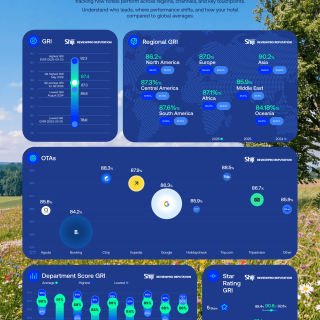
We are pleased to report that our certified businesses are achieving higher-than-average Global Review Index (GRI) scores, which is a testament to their exceptional tourism experiences.
In the context of sustainable tourism, how vital is guest feedback in shaping the services and offerings of your member organisations? How do you encourage and facilitate this feedback loop?
As a tourism business, customer satisfaction is paramount to their success. Good, consistent reviews and ratings online and by word-of-mouth will increase their chances of being booked and set positive expectations for prospective guests. Seeking feedback and monitoring customer satisfaction facilitates a constructive review process where actions can be taken to improve customer experience and product management. Businesses can improve their sustainable tourism practices and identify issues by collecting feedback from their guests. Online reviews help businesses understand guests’ expectations and where they performed well compared to where they under-delivered to continuously develop and improve their experience.
We recommend to our Certified operators that guests be provided with multiple opportunities to share feedback online. This can be done during a tour briefing, upon arrival at a hotel, at the exit of an attraction, and through a post-experience email. Certified operators understand the importance of collecting, replying to, and delivering feedback from guests as a key criterion in their Certification application and renewal.
By monitoring, responding to, and acting upon customer feedback, businesses can continue to develop their products and experiences to suit visitor demands better, resulting in word-of-mouth publicity, satisfied return customers, and contribution to long-term financial sustainability.
What are the main challenges and opportunities in sustainable tourism? How is Ecotourism Australia addressing these?
Greenwashing is a significant global issue that we need to work together to address. There is a significant global shift around the credibility and authenticity of tourism business and destination claims to ensure they are backed up. Today, consumers are extremely aware of greenwashing and factoring this into their purchasing and travel decisions. By choosing to experience Australia with Certified operators and destinations, travellers can feel assured that the business or region is committed to authentic sustainability and positively contributes to the environment and local communities.
The understanding gap between travellers and businesses is another challenge for sustainable tourism. While more travellers increasingly say sustainability is important to them, there can be a lack of understanding beyond recycling and not using single-use plastics. This was apparent in the review analysis as the predominant focus in customer reviews was on environmental sustainability. Encouraging our Certified operators to share their sustainability commitment, Certification story, and best practice initiatives in their digital communications and during the experience can help close this gap.
Additionally, sustainability is synonymous with nature-based travel. Sustainable tourism is also important outside of natural environments as all tourism activity impacts its operating environment, the local economy and community, and the region’s culture. Our work with our partners, such as Tourism Australia and the Caravan Industry Association of Australia, is helping to spread the sustainability message to a broader audience of consumers and businesses.
A key opportunity for the industry is the changing demands of travellers – visitors and operators are looking for sustainable and responsible options and are seeking clear, credible certification standards. We know we need to commit now to start embedding sustainability as a normal part of business; indeed, it is a ‘must do’, no longer a ‘nice to have’. Our role is to help businesses seeking to improve their sustainability start their journey with the pre-certification benchmarking tool Strive 4 Sustainability Scorecard or take the next step and achieve global best-practice certification standards to meet traveller expectations.

What advice would you give them based on the data and trends you’ve observed for new tourism operators entering the market with a focus on sustainability?
For businesses looking to become more sustainable or entering the market for the first time, the Strive 4 Sustainability Scorecard is a great tool to help you. It is an entry-level program designed to help operators answer questions like ‘What is sustainability?’ and ‘What do I need to do to be more sustainable?’ The Scorecard is based on the four pillars of sustainability – environment, culture, socio-economic, and sustainable management – and provides businesses with a framework to develop their practices. When they’re ready for the next step, operators can move to ECO or Sustainable Tourism Certification to meet global best practice standards.
The Australian Government’s National Sustainability Framework and Sustainable Tourism Toolkit released by Austrade in 2023 is also a great tool to help businesses get started on their sustainability. The Toolkit outlines a cohesive definition of sustainable tourism and provides handy tips and, tricks, and templates operators can use in their business. The toolkit is the basis of the sustainability requirements used in our certification programs and is an important resource that any operator can access.
Based on the data and trends we’ve observed, it is crucial for businesses to communicate their sustainability commitment, story, and initiatives with guests at touchpoints throughout their journey, from the research stage to post-experience. By communicating accurate and interesting information, guests can walk away with a solid understanding of sustainability, be inspired to learn more, and potentially seek other sustainable operators in the future.
General recommendations to businesses include offering information about the local area, encouraging guests to participate in conservation and community engagement activities, and informing guests about your efforts and accomplishments across the four pillars of sustainability. Additionally, it’s helpful to be transparent about your sustainability, including your carbon footprint, strategies for reducing environmental and social impact, and how you engage with local communities to assist visitors in making informed decisions.
How do you envision the role of technology evolving in the sustainable tourism sector? What potential impacts could this have on the industry?
Technology is already helping small businesses promote themselves with online services to attract visitors and educate them on sustainability. This trend will only grow as technology becomes more readily available and user-friendly. Sustainability is already heading towards becoming an everyday part of life for businesses and travellers. More and more technologies are readily available to help them make better, more sustainable decisions. Investment and technological advances are helping fuel this evolution to make sustainable travel the norm for the future.
Conclusion
The insights from our interview with Ecotourism Australia highlight the pivotal role of data analytics, customer feedback, and certification programs in advancing sustainable tourism practices. As the sector continues to evolve, the emphasis on sustainability becomes increasingly critical, not just for preserving natural environments but also for the long-term viability of tourism businesses. The strategic use of technology and the commitment to educating operators and travellers about sustainability are crucial steps toward a more responsible and sustainable tourism industry. Through its initiatives and programs, Ecotourism Australia demonstrates a proactive approach to addressing the challenges and leveraging the opportunities within sustainable tourism, paving the way for a future where sustainability is at the heart of every travel experience.
Footnote:
Ecotourism Australia harnesses the power of Shiji’s ReviewPro system to gather and analyse guest feedback, enabling tourism operators to enhance their sustainability efforts and guest experiences based on actionable insights. This collaborative use of advanced data analytics underpins Ecotourism Australia’s commitment to driving the sustainable tourism sector forward, ensuring that member organisations can adapt to evolving market trends and consumer expectations.
- How to Start a PMS Migration: 6 Steps Before You Change Systems
- Hotel Software Is Learning to Understand Intent
- AI Won’t Replace Hospitality. It Might Save It.
- Hotel PMS Migration Is Really an Exercise in Operational Discovery
- The Hidden Link Between Guest Data, POS Intelligence, and Restaurant Profitability


