


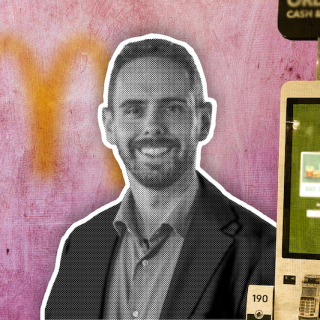




Vincent Lombino is the American Food and Beverage (F&B) wunderkind in sunny Australia, known for transforming and developing hotel Food & Beverage concepts in the last ten-plus years down under. He was in charge of F&B for both Ovolo Hotels and QT Hotels and today runs his own restaurant group, aptly named FnB Collective. They launched mid-pandemic and are poised to open 12-15 restaurant and bar concepts in both Brisbane and Melbourne, Australia, including concepts from Italian to Latin to classic steakhouse.
Vincent and his team have been at the forefront of using technology to make their F&B operations more streamlined for both guests and staff, so we asked him to chat with us about his story, what he thinks about tech in F&B, and how COVID might have actually made F&B concepts stronger.

Vincent Lombino, Founder, FnB Collective
What initially brought you to Australia?
I was working at Noble House, a hotel group in the US that was well-known for its great F&B concepts. My work there caught the eye of the Managing Director of Amalgamated Holdings, a 100-year-old Australian company with many businesses under its umbrella including Rydges Hotels & Resorts, (and since rebranded as Event Hospitality & Entertainment Limited). When I joined the group, they had 50 hotels under the Rydges brand and we then developed a new designer hotel brand called QT Hotels & Resorts with the first hotel to open in Australia with great restaurants and bars located inside.
What did you do with QT Hotels & Resorts?
We started with QT Gold Coast, which had Bazaar, an interactive marketplace. The goal with QT Hotels was to drive F&B businesses in hotels to a new level with great chefs and teams. We opened Stingray Bar, which was a SoCal-inspired bar, and that really took off. In Australia, no one had seen cocktail waitresses, great DJs, and SoCal designs with American-style hospitality and service culture before. When I first arrived in Australia in 2008, some of the things we had been doing in the hotel F&B space in the United States hadn’t caught on yet, so there were a lot of insights to share.
That’s where tech comes in. We need to make it easy for the guest and easy for the staff. We have less people, but they need to be super-efficient. Baristas need to be able to fly and get out 100 coffees in an hour.

We grew quickly and brought in celebrity chefs. I brought over my whole crew from the US. Frankly, we changed the face and the stigma of restaurants in hotels in Australia. It was an incredible 7 years.
We want to build an ecosystem where a guest can buy wine at our wine shop, take the bottle directly to one of our restaurants for no corkage fee, and have it all charged to their room.
Later on, I became the Global Group F&B Director for Ovolo Hotels. Unfortunately, when the COVID lockdown began, they began standing everyone down and budgets were reduced for the same projects. I loved the gig, but just couldn’t make it work, so I went into a creative role with the group that gave me some freedom to start FnB Collective.
What’s the concept or philosophy behind FnB Collective?
FnB Collective is built on pure hospitality. A group of like-minded individuals that know this business inside and out. For us, it’s all about energy – giving energy, having great energy.
If you look at Black Sheep Restaurants in Hong Kong, they put together an eclectic mix of different restaurants that come together under this umbrella of one cohesive vibe – the service culture, ambiance, music, lighting, quality of produce, and plating.
Making the experience seamless will be big for us and giving people choices, whether it be dietary restrictions, straw types, et cetera.
Finally, everything will also be curated down to the nth degree. That’s where tech comes in. We need to make it easy for the guest and easy for the staff. We have less people, but they need to be super-efficient. Baristas need to be able to fly and get out 100 coffees in an hour.

It’s not meant as a plug, but Shiji’s been great to work with on this, especially with their open APIS. We’ll have seven restaurants at one complex that we’re opening and to be able to transfer checks seamlessly between the restaurants is the goal. We want to build an ecosystem where a guest can buy wine at our wine shop, take the bottle directly to one of our restaurants for no corkage fee, and have it all charged to their room.
We’re trying to make it easy for guests, staff, and the people who’ll live in our apartments. It’s all about ease, so we need to cross-train staff to work in different ways and be much more open and multi-skilled in a collaborative environment.
How has the launch been so far?
When we launched mid-COVID, our phone was actually ringing off the hook! We partnered with these cool developers in Brisbane: Pellicano and Perri Group. We have seven concepts in one center, and that size times three in Melbourne – a cluster of eight restaurant and bar concepts, in addition to a hotel. I’m very excited about these projects and our momentum, we’re building a great team.
How can technology facilitate cross-pollination in your different businesses and spaces?
Today, you check-in for almost everything you do. QR codes have become the norm for menus when dining out, but why does it stop there? Payment should be done via mobile, too. Guests should be able to pay for their meals directly from their phone.
We also don’t track enough in F&B. It would be great to figure out how to track people’s dining habits, so we can better cater to them and improve the guest experience. Loyalty should fall into that as well, and be further developed using that data.
Point-of-sale systems are still a giant cash register and order-taker. I’m looking forward to them growing their algorithmic and analytic capabilities, so we can get to know the customer’s preferences better, and understand them to offer better service. Again, it’s about seamlessness. 
How have guest expectations changed in recent times?
They’ve changed massively. Guests just have less patience than they used to before, and it’s a societal thing. Look at Uber, for example. We used to wait comfortably for seven to eight minutes for a ride; today, after two minutes you’re ready to cancel and find another one. Guests are used to high-speed transactions and we need to be on top of wait times for checks because if it’s dragging, it can quickly create a bad impression. Service needs to be fast from start to finish.
We should also, as an industry, begin considering how the next generation wants to order and pay. We still design restaurants for older age groups, but as these younger generations start to dine out more and more, we’ll need to figure out how they dine, how they shop, and what their preferences are.
From your perspective, how has COVID-19 impacted F&B in Australia?
Restaurants in Sydney and Melbourne all adopted pre-pay, so many restaurants now require deposits with a credit card when you make a reservation, which is also required. There is then also a minimum paid in advance, which is lost if you don’t show up.
The biggest thing to come out of this is we’ve always tried to be all things to all people within hospitality. Being open seven days a week from early day to late night with huge menus that try to cover all styles, a huge staff, on top of a massive bar and wine list – we’d do anything and everything to appease our guests and capture the love, respect, and dollar of the customer. It’s going to be a bumpy ride finding great talent. That said, we will see brighter better days ahead.Vincent Lombino
COVID forced us to shave things back down and be more thoughtful in our offer. We shrank the wine list, cocktail menu, and hours of operations. If we can only stay open 4-5 days per week, what are you able to do at a smaller scope? Be who you are and be really great at that. Tell the guest, this is who I am, this is what we do.
In our experience, once people tightened their vision and offering, guests enjoyed it more. They’re happier, their experience is stronger, and we ultimately built a community out of that. People have gravitated to their local places, they want to support their favorite local businesses.
With what we know now, what would you recommend F&B managers do to adapt today?”
F&B managers should use technology to their advantage and find ways to train people faster and more easily – it’s going to be a bumpy ride finding great talent. That said, we will all see brighter, better days ahead. We just have to stay strong and see it through together. Never stop doing great things!


